Monday, September 8, 2008

CIA, FBI push 'Facebook for spies'

By Larry Shaughnessy
CNN

WASHINGTON (CNN) -- When you see people at the office using such Internet sites as Facebook and MySpace, you might suspect those workers are slacking off.
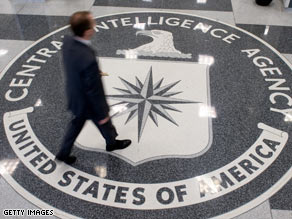
A social-networking site for the world of spying officially launches for the U.S. intelligence community this month.

A social-networking site for the world of spying officially launches for the U.S. intelligence community this month.

But that's not the case at the CIA, the FBI and the National Security Agency, where bosses are encouraging their staff members to use a new social-networking site designed for the super-secret world of spying.

"It's every bit Facebook and YouTube for spies, but it's much, much more," said Michael Wertheimer, assistant deputy director of national intelligence for analysis.

The program is called A-Space, and it's a social-networking site for analysts within the 16 U.S. intelligence agencies.

Instead of posting thoughts about the new Avenged Sevenfold album or Jessica Alba movie, CIA analysts could use A-Space to share information and opinion about al Qaeda movements in the Middle East or Russian naval maneuvers in the Black Sea.

The new A-Space site has been undergoing testing for months and launches officially for the nation's entire intelligence community September 22.

"It's a place where not only spies can meet but share data they've never been able to share before," Wertheimer said. "This is going to give them for the first time a chance to think out loud, think in public amongst their peers, under the protection of an A-Space umbrella."

Wertheimer demonstrated the program to CNN to show how analysts will use it to collaborate.

"One perfect example is if Osama bin Laden comes out with a new video. How is that video obtained? Where are the very sensitive secret sources we may have to put into a context that's not apparent to the rest of the world?" Wertheimer asked.

"In the past, whoever captured that video or captured information about the video kept it in-house. It's highly classified, because it has so very short a shelf life. That information is considered critical to our understanding."

The goal of A-Space, like intelligence analysis in general, is to protect the United States by assessing all the information available to the spy agencies. Missing crucial data can have enormous implications, such as an FBI agent who sent an e-mail before September 11, 2001, warning of people learning to fly airplanes but not learning to land them.

"There was the question, 'Was that a dot that failed to connect?' Well, that person did this via e-mail," Wertheimer said. "A-Space is the kind of place where you can log that observation and know that your fellow analysts can see that."

Even though Facebook, MySpace and other social-networking sites that inspired A-Space are predominantly the domain of young people, there apparently is no such generational divide on A-Space.

"We have found that participation in A-Space crosses every conceivable age line and experience line. People are excited, no matter what age group," Wertheimer said.

Of course, the material on A-Space is highly classified, so it won't be available for the public. Only intelligence personnel with the proper security clearance, and a reason to be examining particular information, can access the site. The creators of A-Space do not want it to be used by some future double agent such as Jonathan Pollard or Robert Hanssen to steal America's 21st-century secrets.

"We're building [a] mechanism to alert that behavior. We call that, for lack of a better term, the MasterCard, where someone is using their credit card in a way they've never used it before, and it alerts so that maybe that credit card has been stolen," Wertheimer said. "Same thing here. We're going to actually do patterns on the way people use A-Space."

Yes, analysts can collect friends on A-Space the way people can on Facebook. But nobody outside the intelligence community will ever know -- because they're secret.

Original here

Sunday, September 7, 2008

Iraq Angry Over Possible US Spying

The Iraqi government reacted sharply Friday to published allegations that the U.S. spied on Iraq's prime minister, warning that future ties with the United States could be in jeopardy if the report is true.

The allegations appear in a new book, The War Within: A Secret White House History, 2006-2008, by journalist Bob Woodward, who writes that the United States spied extensively on Prime Minister Nouri al-Maliki, his staff and other government officials.

The report emerged as the two governments are in delicate negotiations over the future of American troops in Iraq. Those talks have already extended past their July 31 deadline and have drawn sharp criticism from Iraqis who want an end to the U.S. presence.

Critics may well use the allegation to step up pressure on the government not to sign a deal or hold out for the most favorable terms.

Iraqi government spokesman Ali al-Dabbagh said Baghdad will raise the allegations with the U.S. and ask for an explanation. But if true, he warned, it shows a lack of trust.

"It reflects also that the institutions in the United States are used to spy on their friends and their enemies in the same way," al-Dabbagh said in a statement.

"If it is true, it casts a shadow on the future relations with such institutions," al-Dabbagh added, referring to the CIA and other U.S. intelligence agencies.

In Washington, the White House declined to comment directly on the allegations. Instead, spokeswoman Dana Perino said official channels of communication between the two governments happen daily.

"We have a good idea of what Prime Minister Maliki is thinking because he tells us, very frankly and very candidly, as often as we can," Perino said.

The security agreement which Washington and Baghdad are negotiating will determine the future status of the U.S. military in Iraq after the current U.N. mandate expires at the end of the year.

Officials from both sides say a draft agreement would see American troops leave Iraqi cities as soon as June 30. The Iraqis want all forces out by the end of 2011.

Other key issues remain unresolved, including the issue of legal jurisdiction over Americans in Iraq, as the Iraqi forces assume greater responsibility.

Bush has long resisted a timetable for pulling troops out of Iraq, even under heavy pressure from a nation distressed by American deaths and discouraged by the length of the war, which began in 2003.

There is also grumbling about the security agreement among other Iraqi factions.

A spokesman for the largest Sunni Arab bloc in parliament warned Friday against the U.S. pulling its troops out of the cities too early.

Sunnis are particularly concerned that they don't trust the mostly Shiite army and police. They also fear Shiite militias and Iran, the predominantly Shiite neighbor, would wield too much sway in Iraq's mostly Shiite government after the Americans leave.

"There are political forces who welcome the withdrawal of American troops from Iraq, but there are also fears from other forces of the possibility that militias and al-qaeda might activate again and ... some neighboring countries would snatch this opportunity to dominate their presence in the Iraqi arena," Salim Abdullah al-Jubouri, spokesman for the Iraqi Accordance Front, told the U.S.-funded Radio Sawa.

Anti-American Shiite cleric Muqtada al-Sadr's followers, meanwhile, fear the deal will bind the U.S. and Iraq in a long-term security relationship, instead of restoring Iraqi sovereignty.

Clerics at Friday prayers in the Baghdad slum of Sadr City and the southern city of Kufa denounced the agreement.

"The suspicious agreement is a permanent occupation of Iraq," read a banner held by one worshipper during a march in Kufa.

Woodward's book, which is set to be released Monday, also describes Bush as detached, tentative and slow to react to the escalating violence in Iraq, The Washington Post reported on its Web site Thursday night.

The book is the fourth by Woodward, an associate editor at The Washington Post, to examine the inner debates of the Bush Administration and its handling of the wars in Iraq and Afghanistan.

Silver State Bank taken over by FDIC

The Nevada Financial Institutions Division (FID) today announced that it has taken possession of Silver State Bank and appointed the Federal Deposit Insurance Corporation (FDIC) as receiver.

"It's very important that Nevadans know that their insured deposits are secure," said FID Commissioner George E. Burns. "Bank customers should remember that their deposits are insured by the FDIC for up to $100,000 per depositor, per type of account ownership, and up to $250,000 for certain retirement accounts, such as IRAs (Individual Retirement Accounts)."

The Financial Institutions Division is the regulator for all Nevada state-chartered depository institutions including banks, credit unions, thrifts, and trust companies. "Silver State Bank's demise is of significant concern to our state's financial industry, and because of its condition, it was necessary to take possession of the bank and appoint the FDIC as receiver," said Commissioner Burns. "Our goal is to protect depositors, minimize disruption to business and to preserve employees' jobs as much as possible."

"I'm confident that the action taken today by the State's Financial Institutions Division is the best option for protecting Nevadans' deposits in Silver State Bank," said Governor Jim Gibbons. "It's always troubling when a financial institution fails, but the people of Nevada can be sure the State is working diligently to protect their interests."

Silver State Bank customers will continue to have access to banking services over the weekend, and normal business hours and access to banking services will continue on Monday, September 8, 2008, under the control of the FDIC. Customers may phone the Financial Institutions Division at (702) 486-4120 for additional information regarding Silver State Bank.

Customers of Silver State Bank may phone the FDIC at 1-877-275-3342 or 1-866-806-5919 for additional information regarding the receivership or the bank. To determine if your account is fully insured, visit .

"We will continue to work closely with the FDIC to manage this situation as smoothly as possible," said Commissioner Burns. "Despite the challenges the financial industry is currently facing, the banking system continues to be fundamentally safe and sound," commented Commissioner Burns. "As always, depositors should make informed financial decisions, but I remain confident in the regulatory systems in place to protect the public interest at federally insured institutions."